Search Results for: du z

Terrestrial Carbon Cycle

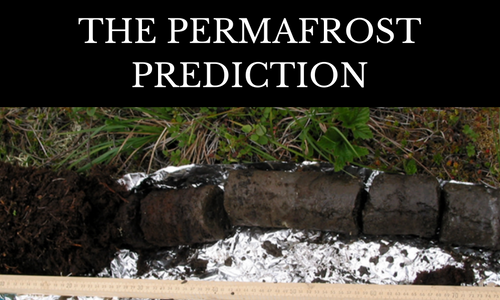
The Arctic continues to warm at a rate that is currently twice as fast as the global average (see essay on Surface Air Temperature). Warming is causing normally frozen ground (permafrost) to thaw, exposing significant quantities of organic soil carbon to decomposition by soil microbes (Romanovsky et al. 2010, Romanovsky […]

An empirical spatiotemporal description of the global surface-atmosphere carbon fluxes: opportunities and data limitations

Understanding the global carbon (C) cycle is of crucial importance to map current and future climate dynamics relative to global environmental change. A full characterization of C cycling requires detailed information on spatiotemporal patterns of surface-atmosphere fluxes. However, relevant C cycle observations are highly variable in their coverage and reporting […]

DECADAL TRENDS IN THE SEASONAL-CYCLE AMPLITUDE OF TERRESTRIAL CO2 EXCHANGE RESULTING FROM THE ENSEMBLE OF TERRESTRIAL BIOSPHERE MODELS

The seasonal-cycle amplitude (SCA) of the atmosphere–ecosystem carbon dioxide (CO2) exchange rate is a useful metric of the responsiveness of the terrestrial biosphere to environmental variations. It is unclear, however, what underlying mechanisms are responsible for the observed increasing trend of SCA in atmospheric CO2 concentration. Using output data from […]

DataONE: A Data Federation with Provenance Support

DataONE is a federated data network focusing on earth and environmental science data. We present the provenance and search features of DataONE by means of an example involving three earth scientists who interact through a DataONE Member Node. DataONE provenance systems enable reproducible research and facilitate proper attribution of scientific […]

Climate-driven changes in forest succession and the influence of management on forest carbon dynamics in the Puget Lowlands of Washington State, USA

Projecting the response of forests to changing climate requires understanding how biotic and abiotic controls on tree growth will change over time. As temperature and interannual precipitation variability increase, the overall forest response is likely to be influenced by species-specific responses to changing climate. Management actions that alter composition and […]